21st Annual IOP Conference
UBC Vancouver
Saturday, May 5, 2018
8:30am – 1:30pm
IOP 2018 Conference Theme: Leading Our Own Learning
Teaching is demanding and complex work, made more difficult if we try to do it in isolation or without sharing and exploring our understandings together. In order to better understand and improve our practice, many of us engage in classroom, program or institution-based investigations focusing on the what, the how and the why of our practice.
On May 5, 2018, UBC hosts the 21st Annual IOP Conference where practicing teachers, university educators, graduate students and student teachers from different educational contexts (schools, universities and colleges) come together to share their questions, investigations and understandings about their practice.
The IOP conference stresses dialogue among participants; presentations are intended to provoke and inform discussion. These exchanges typically fall within the following areas of inquiry:
- the preparation of practitioners
- the ongoing education of practitioners
- the focus on classroom practice
- the context of practice (e.g., social, political and cultural analysis of practice)
- researching practice (e.g., teacher inquiry/action research)
2018 Sub-Themes:
- Assessment and reporting practices
- Practicing teacher research
- New curriculum practices
- Inquiry as a method of teaching
- Inclusive education practices
- Including Indigenous education practices
- Mentoring practices
- Social and emotional learning
- Mental health
This annual conference is offered by UBC Faculty of Education and the BC Teachers’ Federation.
The call for proposals is now closed - thank you to all who submitted! The committee will begin reviewing proposals soon, and we'll be in touch with authors by March 9.
In the spirit of IOP, if you are chosen to present your work at the conference, we hope that you will also attend other presentations offered at the conference.
We suggest that all those who present their work at the conference provide a simple one-page summary of their work for distribution at the conference (20 copies should suffice).
Submissions & Timeline
Submit your proposal to present using the online submission form:
- Call for Proposals opens: Friday, January 19
- Call for Proposals due: Friday, March 2
- Presenters Notified by: Friday, March 9
- Early Bird Registration: Friday, April 6
Presentation Guidelines
When organizing IOP, the committee has a limited number of rooms and often more applications to present than can be accommodated. The varying formats (presentations, roundtables, posters) and time allocations provide the committee with some flexibility to maximize the number of proposals accepted. Please consider which format best suits your needs but also indicate whether others are acceptable should the committee not be able to meet your first choice.
IOP is intended to foster dialogue and discourse. In order to do that, we request that presenters limit their delivery and allow time for discussion. All sessions will be chaired and the Chair will enforce time limits. If you submit a proposal to IOP, the assumption is that you have accepted the time limits for presentation outlined below.
In the spirit of IOP, if you are chosen to present your work at the conference, we hope that you will also attend other presentations offered at the conference.
We suggest that all those who present their work at the conference provide a simple one-page summary of their work for distribution at the conference (20 copies should suffice).
- We want challenging, relevant, interactive presentations that showcase how you have been investigating some dimension of teaching practice.
- Session time should be divided equally between provoking discussion by providing access to your understandings, and providing opportunity for others to discuss your conclusions.
- Individual presentations are allotted 20 minutes. The formal aspect of the presentation (e.g., PowerPoint) should last for a maximum of 10 minutes, with 10 minutes for discussion.
- Panel/group presentations are allotted 40 minutes. The formal aspect of the presentation (e.g., PowerPoint) should last for a maximum of 20 minutes, with 20 minutes for discussion.
- Proposals: maximum of 350 words.
- You have a critical question you would like to discuss with other practitioners and you are willing to initiate and moderate a conversation, perhaps based on your own experience or research.
- IOP roundtables are intended to encourage sharing and networking among participants interested in a specific theme or issue. Roundtables are not intended to include lengthy or formal presentations. The idea is to introduce a topic briefly and informally — and then to invite participants to share what they may be doing and thinking in relation to that topic.
- For example, a presenter could introduce a topic by raising one or two questions and/or providing some background information on a one-page handout. The introduction should last no longer than five minutes, leaving 15 minutes for conversation.
- The poster format is ideal for the visual presentation of research results, a program of research or research activities of a group.
- Poster sessions will be organized in two 15-minute time slots, where presenters are available to answer questions.
- For information on creating an effective poster, visit: www.ncsu.edu/project/posters.
2018 registration is CLOSED.
Registration fees include the conference, refreshments and a delightful lunch, plus an opportunity to win an assortment of door prizes!
Registration fees are paid through our secure online payment gateway via credit card or accepted interac cards (BMO, RBC, ScotiaBank, TD CanadaTrust). Please note we are unable to accept Visa Debit cards.
Early Bird Rates
Early Bird rates apply to full payment of fees received on or before Friday, April 6th 2018. If you do not wish to make your payment online, you may select to pay "in-person" on the registration form. To receive the Early Bird rates, you must submit fees in cash (personal cheques are not accepted) at the PDCE Office (Scarfe, room 1304) and are required to bring the exact amount (no change is available on site).
- All payments made after April 6 will be at the regular full rate and must be paid at the registration table on May 14 (they will not be accepted in the PDCE Office).
NOTE: the registration and payment page will open in a secure Faculty of Education ePayment site.
All participants and conference presenters are required to register and pay fees.
Early Bird Fees - ends April 6
- Regular Rate | $25
- Student Rate | $15
Regular Fees - begins April 7
- Regular Rate | $30
- Student Rate | $20
Need Assistance?
If you require assistance with registration, contact pdce.educ@ubc.ca or call 604.822.2013.
Volunteer with us!
Would you like to join the fun and gain free admission to the 21st Annual IOP Conference? We are looking for volunteers to join us on Saturday, May 5 2018. In exchange for your participation, you will receive:
- Free admission to the conference, which includes breakfast, refreshments and lunch
- An opportunity to attend engaging and informative sessions
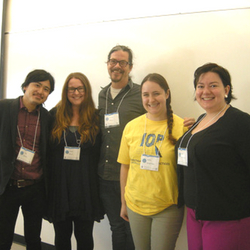
- The opportunity to wear a yellow IOP Volunteer T-shirt for the day
- You would also be expected to attend a volunteer orientation on Friday, May 4th, 1-2:00pm in Neville Scarfe, Room 310.
We are recruiting for the following roles:
- Event set-up & tear-down
- Registration & Information
- Session Chair
- Technical Support
To join us, please fill out the IOP Volunteer Form, below.
The form will be open from Friday, March 30th – Friday, April 13th 2018.
Applications will be received and approved on a first-come first-served basis.
If you are presenting and have already registered for the conference, we will reimburse your fees within two weeks following the conference, subject to attendance.
Any questions, please contact pdce.educ@ubc.ca
Getting Here
UBC Vancouver Campus
Neville Scarfe Building
2125 Main Mall | Map
Construction routes change often, so planning to arrive early is the surest way to reach your destination on time.
- Neville Scarfe (Education) Building
- Building Access Points
- West Parkade
- App | Finding UBC Buildings
Note: This iPhone application is useful for locating building addresses, but does not provide information about construction on campus.
- Translink website
Walking directions to the Neville Scarfe (Education) Building:
The most direct route to the Neville Scarfe (Education) Building:
A | Turn from SW Marine Drive University Blvd., then turn right onto Lower Mall
B | Park at the West Parkade, and proceed on foot
C | To Scarfe [Building Access Points]
Join us for the 21st annual IOP Conference!
IOP Decorum:
We’d like to highlight the following to reminders for all IOP Participants:
- Arrive early or on time for all sessions, particularly after the poster presentation and nutrition breaks.
- Stay for the full session, it’s important to encourage and support all presenters!
| 8:30AM-9:00AM | - | Registration (Neville Scarfe Lobby) & Refreshments |
| 9:00AM-9:40AM | - | Session A - Presentations |
| 9:45AM-10:00AM | - | Session B - Posters (2nd floor corridor) & Refreshments |
| 10:05AM-10:45AM | - | Session C - Presentations |
| 10:45AM-11:00AM | - | Session D - Posters (2nd floor corridor) & Refreshments |
| 11:05AM-11:45AM | - | Session E - Presentations |
| 11:50AM-12:30PM | - | Session F - Themed Conservations |
| 12:35PM-1:30PM | - | Catered Lunch, Door Prizes, & Conference Evaluations |
2018 schedule now available!
Click on the presentation titles below to view the full abstract online. You can also download the PDF Schedule.
SESSION A | Presentations | 9:00AM - 9:40AM
ROOM 200
Amy Higgins
K – 3 Writing, Redesigned
Michelle Gilman, Bonny Norton
Storybooks Canada: A Pilot Study of a Digital Innovation for Multilingual Children
ROOM 201
Sandra Filippelli
Teacher/Researcher/Writer Identity
Yoriko Gillard
“Inbetween” without a Hyphen: A Journey of a Language Teacher
ROOM 202
Henry Lee
Teacher Inquiry: Finding your Passion
Rachael Bell-Irving, Stephanie Chong
Lessons from the Field: Best practices in incorporating place-based learning
ROOM 203
Paul Romani
Theme & Project-Based Learning: A Progressive Vancouver School Without Subjects
Kedrick James, Natalia Balyasnikova, Yuya Takeda, Amber Moore
Pedagogical Poetics: The PhoneMe Project in and out of the Classroom
ROOM 204A
Julie White and Laurie Ford
Supportive Practices for Refugee Students in Schools: A Systematic Review
Ashley Moore
How do LGBQ Students “Read” Their Teachers?
ROOM 206
Latika Raisinghani, Johanna Sam, Ashenafi Alemu, Joana Pinto, Shawna Faber
Teaching Assessment and Learning through Team-Based Approach: Reflecting on Our Own Practices
Alexis Birner, Louisa Chan
The Power of the iPhone: Using Mobile Devices to Change Assessment Methods
ROOM 207
Juliane Dmyterko
Collaboration Between Teachers and Education Assistants (EAs): Practical Ways to Build Your Team and Work Together to Support Students
Lisa Marques, Katie Wihak, Wendy Briggs, Rose Alexis
Water – Friend of Enemy?
ROOM 208
Christina Pulice-Smith, Gurjeevan Gill
Trauma Sensitive Practice in Education
Nick Korvin
Teacher Inquiry: Supporting Students With Anxiety in the Classroom
SESSION B | Posters | 9:45AM - 10:00AM
*CONTINUED IN SESSION D*
ROOM 200
ROOM 201
ROOM 203
ROOM 206
Sonja van der Putten
The Impact of School Communities on Female Adolescents from Refugee Backgrounds
ROOM 207
Olatunbosun Emmanuel Ogunseemi
Pre-Service Science Teachers’ Teaching Practice with Focus on Conception and Misconception of Science Concepts
ROOM 208
Ling Shi, Cindy Leibel, Ellie Chen
A Web Forum for Citation Practices
SESSION C | Presentations | 10:05AM – 10:45AM
ROOM 200
Audrey Sargent, Amy Perreault
Indigenous Education: Moving Beyond Awareness to Understanding
Abhayjeet Sachal, Arry Pandher, Faith Carswell
Break The Divide
ROOM 201
John Bruyere, Amy Flett, Christopher Rich, Elizabeth Beattie, Stacy Friedman, Sandra Scott, Douglas Adler – (40-minute session)
Collaborative Inquiry in the School Garden
ROOM 202
Dr. Thomas Culham, Dr. Neha Shivhare
Transformative Potential of Contemplative Practices in Education
Saeed Nazari
The Power of Dialogue in Teacher Development
ROOM 203
Tanya Noble, Susan Bankonin, Sonya Semail
What does 83% Mean? Assessment for Learning: Math 8 at Killarney Secondary
Martin Jones
Livetime Assessment and Continuous Feedback
ROOM 204A
Rochelle Picardo, Laurie Ford
Foster Parents of Children with Special Needs: Experiences with School Involvement
Sophie Cooper and Laurie Ford
Engaging Secondary Students in Their Individualized Education Program (IEP)
ROOM 206
ROOM 207
Moira Fricke
The Bolt Story – How a Group of Diverse High School Students Became Entrepreneurs
Sheryl MacMath, Barbara Salingre, Vandy Britton, Janet Carroll
Multiple-Mini Interviews as a way to Maximize Applicant Diversity in Teacher Education
ROOM 207
Shirley Giroux
Teaching After Children: Resilience in Teacher/Mothers
Danae Hodgins
Cultivating a Culture of Wellness in Schools
SESSION D | Posters | 10:45AM – 11:00AM
*CONTINUED FROM SESSION B*
SESSION E | Presentations | 11:05AM – 11:45AM
ROOM 200
Sean Chorney, Latika Raisinghani
Social Justice and Mathematics
Kofi Amoah, Arthur Chen, Cynthia Nicol, Vanessa Radzimski, and Kwesi Yaro
Learning to Teach Mathematics for Social Justice: Possibilities and Challenges
ROOM 201
ROOM 202
Tracy Harrington
Learning For All
Yuko Keane, Jamie Morris, Lindsay Foster
Inclusive Gifted & Enriched Education
ROOM 203
Andrea Page
The Power of Yet: Developing the Growth Mindset through Meaningful Feedback in a Primary Classroom
Laurence Greeff, Gwen Thornburn
Responding to Mental Health Problems in a Classroom Setting
ROOM 204A
Beth Tuinstra
The Inclusion of non-Western Musics in BC K-12 Schools
Brian Weingartner
Decolonizing the Concert Band
ROOM 206
Linda Zenzen, Lisa Ego
School Mentorship – Roundtable Discussion
Harini Rajagopal, Sophie Sadri
Learning Together as Teacher and Researcher: Surprises and Challenges Framed in a Collaborative Photo Project
ROOM 207
Moira Fricke
The Bolt Story – How a Group of Diverse High School Students Became Entrepreneurs
Sheryl MacMath, Barbara Salingre, Vandy Britton, Janet Carroll
Multiple-Mini Interviews as a way to Maximize Applicant Diversity in Teacher Education
ROOM 208
Shirley Giroux
Teaching After Children: Resilience in Teacher/Mothers
Danae Hodgins
Cultivating a Culture of Wellness in Schools
SESSION F | Themed Conversations | 11:50AM – 12:30PM
ROOM 200
Curriculum: Change, Implementation, and Transformation
Chair: Andrée Gacoin
ROOM 201
Student Mental Health & Wellness: Pedagogies of Care
Chair: Kerry Renwick
ROOM 202
Indigenous Perspectives: Practices and Possibilities
Chair: Cynthia Nicol, Kwesi Yaro, Kofi Amoah, Shannon Leddy
ROOM 203
Inquiries into Practice: Lessons from the Field: Best Practices in incorporating Place-Based Learning
Chair: Henry Lee
ROOM 204A
Teachers’ Mental Health & Wellness: Care of the Self
Chair: Anne Hales
ROOM 206
Inclusive Education: What it Means in Today’s Classrooms
Chair: BCTF
Lunch | 12:35PM - 1:30PM
IOP Conference Lunch - served in Room 209